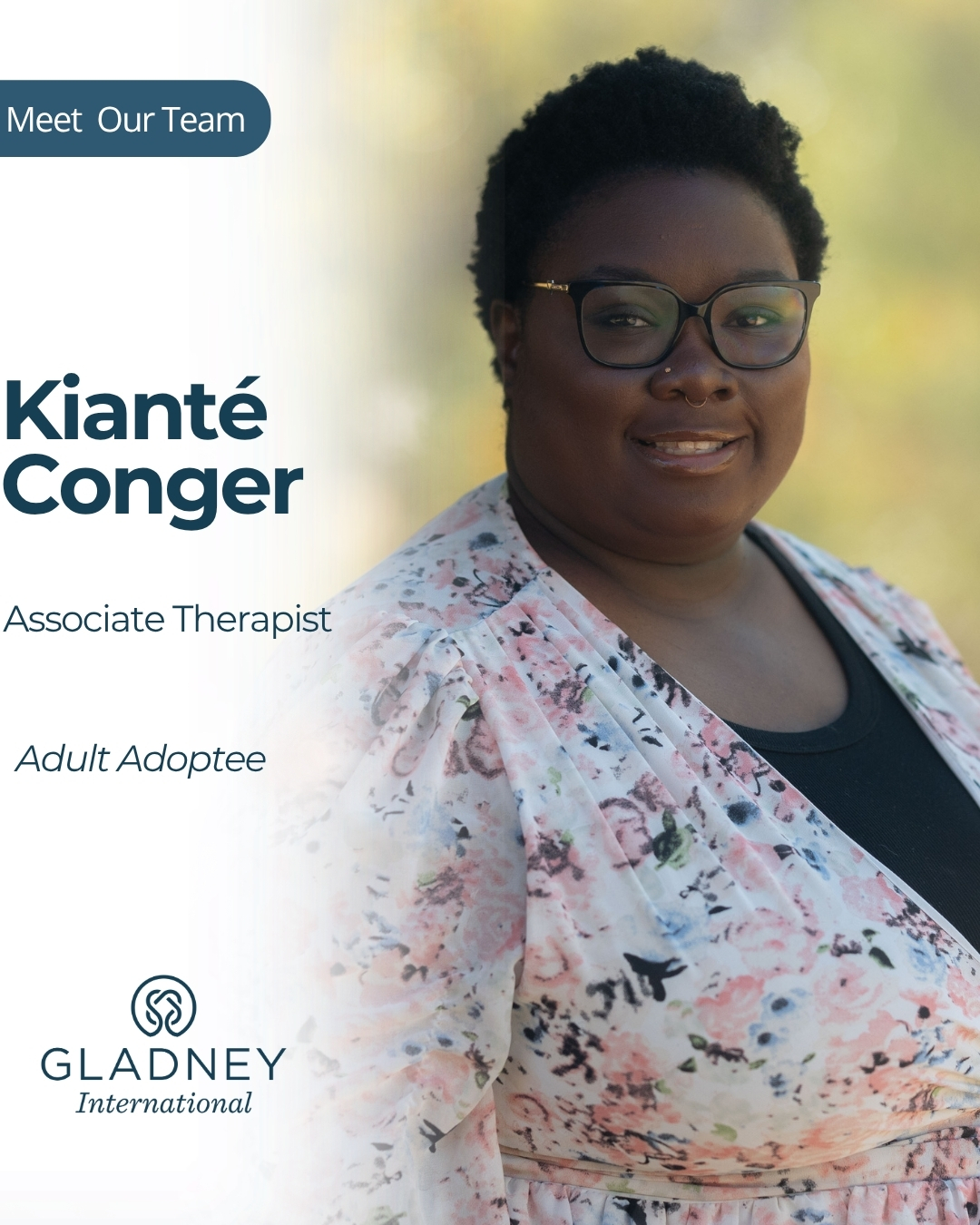
We asked Kianté Conger what her journey of understanding her identity as a transracial adoptee looked like over time and she responded with this:
“I’m Kianté Conger, an Associate Therapist with Gladney Counseling Services. As a transracial adoptee, my understanding of who I am didn’t come all at once. It evolved over time. When I was younger, I didn’t fully understand adoption. My family was my family. The only difference I saw was skin color, but I didn’t have language for it. I just knew, if two plus two equals four, then me plus my white parents didn’t quite “add up” in the way the world expected. That shifted in college. I realized the privilege I experienced within my family didn’t extend into the world. Outside of my home, I was seen as a Black woman, and that changed everything. As a teen, I started processing my adoption more deeply. I used to think it was the core of my identity, but now I know it’s just one part of me. Still important…but not the whole story. There were moments where belonging felt complicated. Code-switching. Not “white enough” for some spaces, not “Black enough” for others. Comments like “oreo” stayed with me longer than people probably realized.
And like many adoptees, I’ve held that quiet tension, feeling grateful for my family while also longing to understand where I come from. My family loved me well and never made me feel different. At the same time, I wish we had talked more about race and prepared for what I would face. Love created safety, but it didn’t fully prepare me. Today, my identity feels more expansive. I’m a transracial adoptee, but I’m also a mom, a social worker, a therapist, and an adoption advocate. As it turns out, identity grows! It isn’t just one moment or a label. Working in adoption has helped me sit with the hard parts of my story and, in many ways, hold the hand of the younger version of myself who didn’t fully understand. Because what often gets missed is this: adoption starts with loss. Naming that doesn’t take away from the love, it just makes room for a more honest story. My identity as a transracial adoptee has taught me that identity is so much more than those two words, but those words have also given me a voice. And that matters.”